
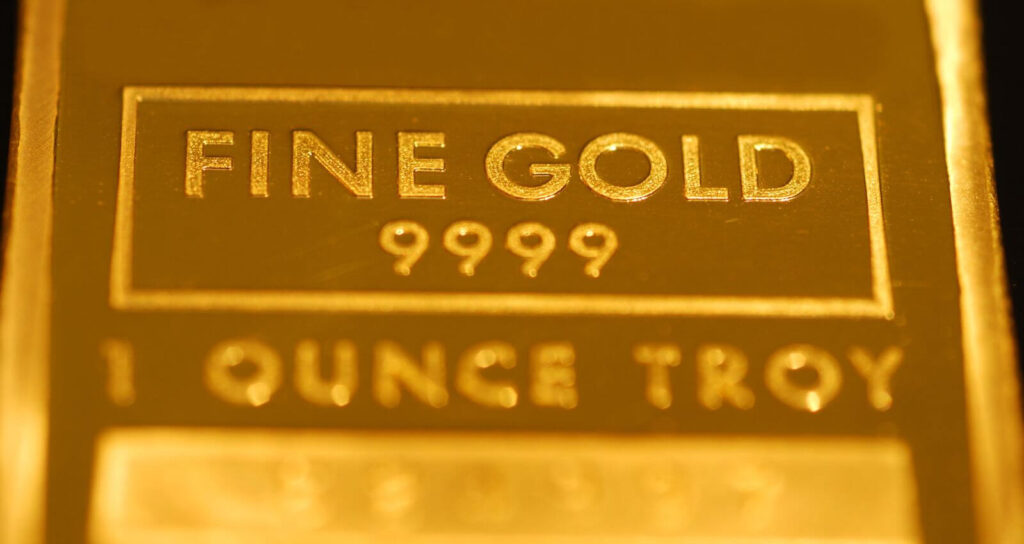
If you’ve ever browsed for gold bars or coins, you’ve most likely come across the term troy ounce. But not everybody is entirely sure what it means or how it differs from a regular ounce. This guide covers everything you need to know, from the history of the Troy ounce to exactly why it matters when buying precious metals.
What is a troy ounce?
A troy ounce is a unit of weight used specifically for precious metals like gold, silver, platinum, and palladium. It’s the global standard for pricing and trading these metals, and has been for centuries. One troy ounce is equal to 31.1034768 grams. This is heavier than the everyday imperial ounce (known as the avoirdupois ounce) that we use to weigh food, letters, and household items, which comes in at 28.3495 grams.
When you see the gold spot price quoted on financial markets or on a bullion dealer’s website, that price always refers to one troy ounce of gold. Understanding this distinction is essential if you want to accurately assess the value of any gold product you’re considering buying.
What is an avoirdupois ounce?
The avoirdupois ounce (sometimes referred to as the “standard ounce”) is the unit of weight most of us encounter in everyday life. It’s what your kitchen scales use, what supermarkets display on food packaging, and what Royal Mail references when calculating postage. One avoirdupois ounce is equal to 28.3495 grams, making it lighter than the troy ounce.
The word “avoirdupois” comes from the Old French aver de peis, meaning “goods of weight”. The term “avoirdupois ounce” has been used since the 13th Century for trading bulk commodities like grain, wool, and sugar.
The avoirdupois system is built around a 16-ounce pound, which is what we use today. This is different from the Troy system, where 12 troy ounces make one troy pound. So while the avoirdupois ounce is the ounce of the supermarket and the post office, it’s not used in the world of gold and silver.
Who invented the Troy ounce?
So, where did the term ‘troy ounce’ come from? Well, it’s often traced back to Troyes, a market town in the Champagne region of France. During the Middle Ages, Troyes was one of the most important trading hubs in Europe, hosting major trade fairs that attracted merchants from across the continent.

These fairs required a standardised system of weights to ensure fair and consistent trade, especially for precious metals and gemstones. From this was born the weight system used at the Troyes fairs, which began to gain acceptance across Europe.
By 1527, the troy ounce had been officially adopted in England for the measurement of gold and silver and replaced the “Tower pound”. Then in 1828, the United States followed suit, cementing the troy ounce as the international standard for precious metals.
Troy ounce vs ounce: what’s the difference?
This is one of the most common points of confusion for new buyers. Both are called “ounces,” but they are not the same, and the difference matters when you’re dealing with precious metals. The key takeaway is that a troy ounce is around 10% heavier than a standard ounce. Here’s a side-by-side comparison:
| Troy Ounce (ozt) | Avoirdupois Ounce (oz) | |
|---|---|---|
| Used for | Precious metals (gold, silver, platinum) | Everyday goods (food, post, household items) |
| Weight in grams | 31.1035 g | 28.3495 g |
| Weight difference | Heavier by ~2.75 g | Lighter by ~2.75 g |
| Abbreviation | ozt | oz |
| Origin | Troyes, France (medieval trade fairs) | Roman system, adopted into imperial |
When does the Troy ounce matter when buying gold?
When you purchase a gold bar or coin, the weight is in troy ounces, and the price you pay is calculated against the current spot price per troy ounce. It’s crucial to understand this as a buyer to ensure you understand the true value of a product.
For example, a 1 Troy ounce gold bar contains 31.1 grams of gold. If someone compared that to a standard ounce (28.35 grams) and assumed they were the same, they’d be undervaluing the product by around 9.7%.
Common Troy ounce conversions
Here are just some quick conversions that are worth knowing when it comes to Troy ounces:
- 1 Troy ounce = 31.1035 grams
- 1 Troy ounce = 0.0311 kilograms
- 1 Troy ounce = 1.097 avoirdupois ounces
- 12 Troy ounces = 1 troy pound
- 1 kilogram = 32.1507 troy ounces
Troy ounce gold bars: a popular choice for investors
1 ounce bars are a great way to invest if you’re going to buy gold, as they represent a meaningful holding while at the same time being affordable for many investors at different levels.
At Bullion Giant, we stock gold bars from a range of respected brands, including PAMP Suisse, Valcambi, The Royal Mint, and more. Each bar is stamped with its weight, purity and a unique serial number for authenticity.
Whether you’re building a long-term investment portfolio or simply starting your journey into physical gold, the 1 ounce gold bar is a tried-and-trusted choice. For more details, contact us on 0800 433 2424, WhatsApp 07747246247 or send an email to sa***@**********nt.com, and our friendly team will be happy to assist.